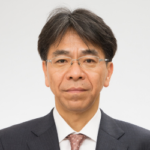
Message from the Chairperson
Let’s lead collective efforts
to reverse the loss of biodiversity
May I first express my deepest condolences to those who have lost loved ones to the COVID-19 pandemic, and my sympathies and best wishes for a full recovery to those or their families who have contracted the disease.
While it has already been pointed out by many people that business as usual (BAU) is not sustainable from the perspective of the climate emergency, this time’s pandemic has exposed other issues of our BAU.
These include the excessive use of wildlife as food or pets; indiscriminate deforestation to meet human demand; and, moreover, the vulnerability of long and complex supply chains that are overly dependent on other countries.
Even though it was, of course, not the intention of such actions, we could say that they consequently spurred on the loss of biodiversity, and also led to the outbreak and global spread of the virus.
What can companies do about the grave issue of biodiversity loss? It was with such thoughts that JBIB was formed in 2008.
With the decision to host the CBD-COP10 in Japan, momentum was rising for companies to think about what they could and should do.
When COP10 was held in Nagoya in 2010, the Aichi Biodiversity Targets—20 targets to be achieved by the world, including businesses, by 2020—were adopted. Other very substantial accomplishments were achieved, including adoption of the Nagoya Protocol on ABS and establishment of the Japan Business and Biodiversity Partnership.
Informed by such targets and frameworks, JBIB has also been carrying out various activities as a group of responsible companies.
However, according to the Global Biodiversity Outlook 5 (GBO5) released last year in 2020, not a single one of the 20 Aichi targets were fully met, and out of the total 60 elements of the targets, only 7, just 12%, were achieved—a figure that cannot be considered satisfactory by any means.
There is no question that our companies have been making serious efforts, and I believe that we have all been proceeding in the right direction, but we should honestly acknowledge and regret that the scale and speed of those initiatives were not sufficient.
Against this backdrop, recent years have also seen a growing number of company executives who are aware of how essential it is to protect and restore natural capital, which forms the foundation of business, and who wish to reflect this in the management of their companies.
In 2020, last year, JBIB also joined Business for Nature (BfN) with the desire to conduct activities with like-minded companies around the world. While exchanging information with these companies, we are dedicating efforts to accelerate this movement.
BfN is leading a “Call to Action,” wherein companies call for their governments to include the goal of reversing the loss of biodiversity by 2030 in the Post-2020 Global Biodiversity Framework, which will be decided at COP15. MS&AD Holdings, where I work, is also participating in this movement as one of its early supporters.
Recently, nature-based solutions (NbS), which seek to beneficially utilize ecosystem services to find solutions to various problems, and natural climate solutions (NCS), which address the climate crisis in particular, have been attracting attention.
JBIB plans to also devote efforts to spread the use of these approaches by calling upon not only its member companies, but Japan’s industrial circles. And, above all, we wish to enable our member companies, and Japan, to offer new solutions and values.
If we act together, it will be possible to reverse the loss of biodiversity by 2030.
Businesses have the power to do so. I have complete faith in this. I hope that more companies will support this belief for a real reversal of the loss of biodiversity.
Let us work together, first in the runup to COP15, and then for the next 10 years.

Japan Business Initiative for Biodiversity